
December 2025 Hiring Trends Every Job Board Should Know
 Happy Tuesday, Job Board Doctor friends! Just ahead of Wednesday’s November US Jobs Report (delayed due to the government shutdown) and last week’s Federal Reserve interest rate cut, I didn’t want to miss the chance to share data insights from our partnership with Aspen Tech Labs. Until Friday, stay warm. -JS
Every December brings a familiar question from job boards:
“Is the slowdown normal, or is something bigger happening?”
This year, the answer reads like a plot twist.

Talroo brings clarity to improve new-hire retention
You filled the seat, but not with someone who plans to stay. The candidate made it through your entire interview process while quietly interviewing with other companies that pay 25% more.
When expectations aren't clear up front, retention suffers.
Get clarity up front with Talroo's SmartQualify.
Across much of 2025, hiring cooled gradually. But as November’s data rolled in, the shift became unmistakable. Job postings fell 5% month over month and remain 4.4% lower than a year ago. Seasonal softness is expected, but the year-over-year decline suggests a deeper recalibration in employer demand.
For job boards, this is more than a data point. It’s a turning point.
A Market Catching Its Breath
The slowdown isn’t happening in the dark. Analysts at Goldman Sachs flagged mounting signs of labor-market weakness as private-sector layoff announcements rose to their highest non-recession level in years. Against that backdrop, the November drop in postings is part of a larger story: companies are heading into 2026 with tighter budgets, sharper priorities, and far less tolerance for excess hiring.
Yet the market is not collapsing. It’s reshuffling.
And that reshuffling becomes clear when we look at companies, states, and job categories.
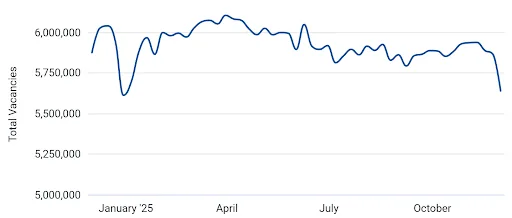
Figure 1: Total U.S. vacancies, last 12 months
State Highlight: South Carolina Shows a Split-Screen Labor Market
South Carolina delivered one of the most interesting state-level stories this month. Vacancies dropped 6% month over month but remain 1.8% higher than a year ago. The market has cooled, but not cracked. Wages are still rising:
- Median full-time salary: $55,702 (+7.1% YoY)
- Part-time median wage: $16.28 (+1.75% YoY)
- Salary transparency: 41.9% of job postings include pay ranges (+5.1 points YoY)
The metro-level split is even more striking:
- Florence: +8.7% YoY vacancies
- Charleston-North Charleston: +1.8% YoY
- Greenville–Anderson–Greer: –5.1%
- Myrtle Beach–Conway–North Myrtle Beach: –11.2%
Job boards serving this region should expect mixed performance: resilient wage growth, higher transparency, but softer demand in tourism-heavy metros.
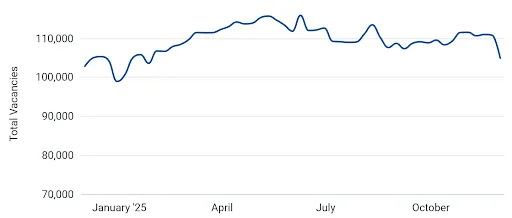
Figure 2: South Carolina weekly vacancy trend, last 12 months
Remote Work: Still Alive, Still Evolving
Remote postings fell 3.7% in November but remain slightly above last year’s level (+0.2% YoY). This aligns with a broader corporate push toward hybrid work, yet applicant sentiment continues to tilt the other way. A recent multi-university study reveals that many candidates remain willing to trade salary for flexibility.
For boards, this presents a tactical opportunity:
Highlight remote roles aggressively, even if volume is shrinking. Jobseekers still flock to them.

Figure 3: Total remote job listings, last 12 months
Pay Trends: Wages Hold Firm
Median full-time pay stayed steady at $64,002 in November, up 6.1% YoY. Part-time pay dipped slightly to $18.00 per hour, down 1.37% month over month. Salary transparency remains elevated at 51.2% of postings despite a slight monthly decline (–0.7 points). The long-term trend toward pay disclosure is still firmly in place, at +6.9 points YoY.
Boards that require or encourage salary ranges continue to see higher application rates and better rankings across job search platforms.
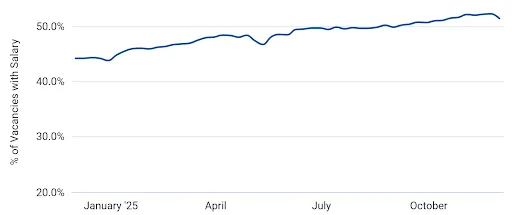
Figure 4: Salary transparency in the U.S., last 12 months
Google for Jobs Insight
In November, the Google for Jobs platform mix remained led by Indeed, while other major sources shifted places. ATS and company sites rebounded notably, rising to 15.30% and taking second place ahead of ZipRecruiter and LinkedIn, as Indeed eased slightly but remained the clear leader at 20.48%. Among smaller providers, Jobrapido posted the strongest growth, while SimplyHired and BeBee saw sharp declines toward the month’s end.

Figure 5: Market share shifts among leading job sources on GFJ (weekly snapshots)
Among direct-employer buttons, the leaders are concentrated in frontline, high-volume hiring sectors: food service and hospitality (The Capital Grille, PF Chang’s, Compass Group), large outsourced services/security (Allied Universal), and retail healthcare (CVS Health). This suggests that Google’s direct-apply visibility is especially strong for employers with constant, broad recruitment needs and high turnover, who benefit from driving candidates straight to their own career sites.
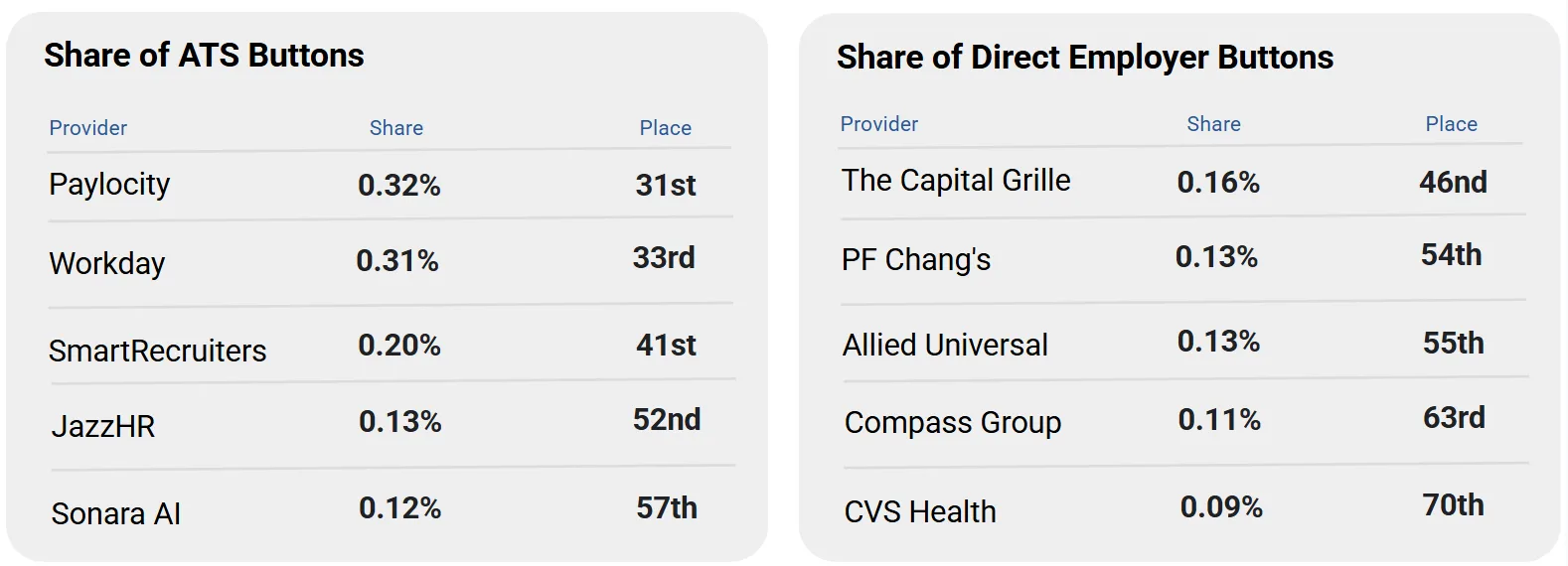
Figure 6: Market share* of the biggest ATSes and direct employers on GFJ (end-November 2025).
*Market share is measured as the share of apply buttons displayed on the top section of the GFJ search results. This measurement is based on up to 4,000 search queries combining popular keywords across all industries in major US locations. The top section, which captures most user traffic, includes the first three apply buttons for each job listing.
Company Signals: Three Very Different December Stories
In a softer market, individual employer behavior becomes the clearest signal for job boards. This month’s standouts show just how divergent hiring strategies have evolved.
Verizon: A Freeze With Teeth
Verizon began December with only 376 open roles. A year ago, it had 1,331. That’s a 71.8% drop, paired with the company’s announcement of 15,000 layoffs under its new restructuring strategy.
For job boards, this is a classic example of how a major employer can move from high-volume to low-volume overnight. When giants like Verizon contract, traffic drops, but the upside is that smaller telecom employers gain visibility they didn’t have before.
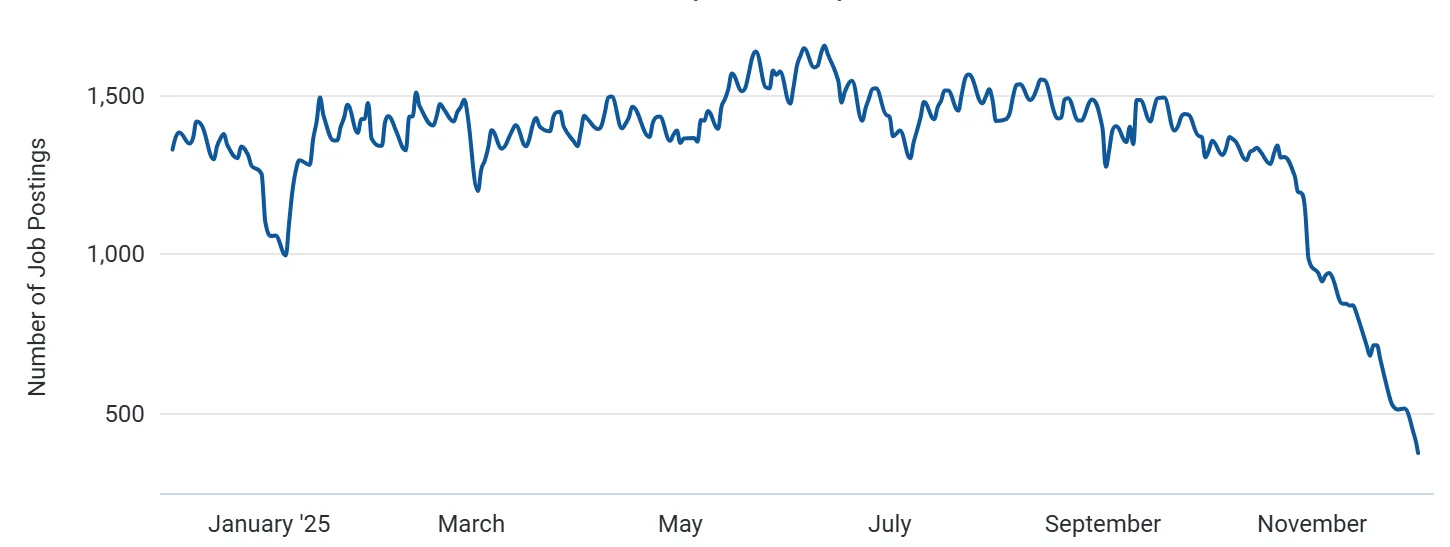
Figure 7: Verizon daily vacancy trend, last 12 months
Amazon: The Slowdown Before the Storm
Amazon’s 2025 slowdown began months before its October announcement of 14,000 layoffs. By early December, active openings fell to 10,756, down 49.3% from last year. Cuts span HR, cloud, advertising, and several corporate functions, revealing a broad internal pullback rather than a single-team adjustment.
This pattern matters for job boards: when large companies retreat, job seekers redirect their attention to mid-market employers, which can increase conversion rates and application activity on long-tail listings.
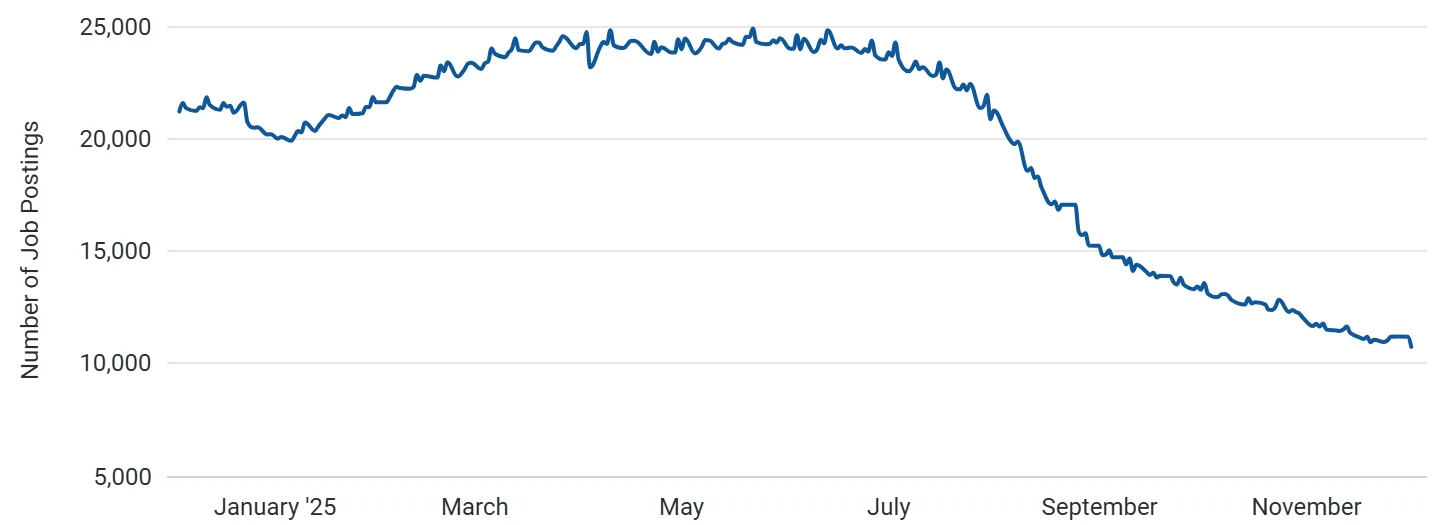
Figure 8: Amazon daily vacancy trend, last 12 months
Neurocrine Biosciences: Hiring Against the Grain
Then there are the outliers.
Neurocrine Biosciences has moved in the opposite direction, expanding active postings from 60 a year ago to 317 in early December, more than a fivefold increase. The surge follows strong Q3 earnings and demand for medical and clinical roles tied to INGREZZA’s sales growth.
For job boards, this is a reminder that even in a cooling market, high-growth pockets can outperform dramatically.

Figure 9: Neurocrine Biosciences’ daily vacancy trend, last 12 months
The Seasonal Curve Is Back
The 2025 curve already mirrors prior years, drifting downward from early fall and following the same seasonal slope. Based on this trajectory, vacancies are likely to keep softening through December, then rebound strongly in January as companies reopen requisitions and launch new-budget hiring.
For job boards, this context matters. The winter dip reflects timing, not deterioration, and the bounce that follows is typically fast and decisive.
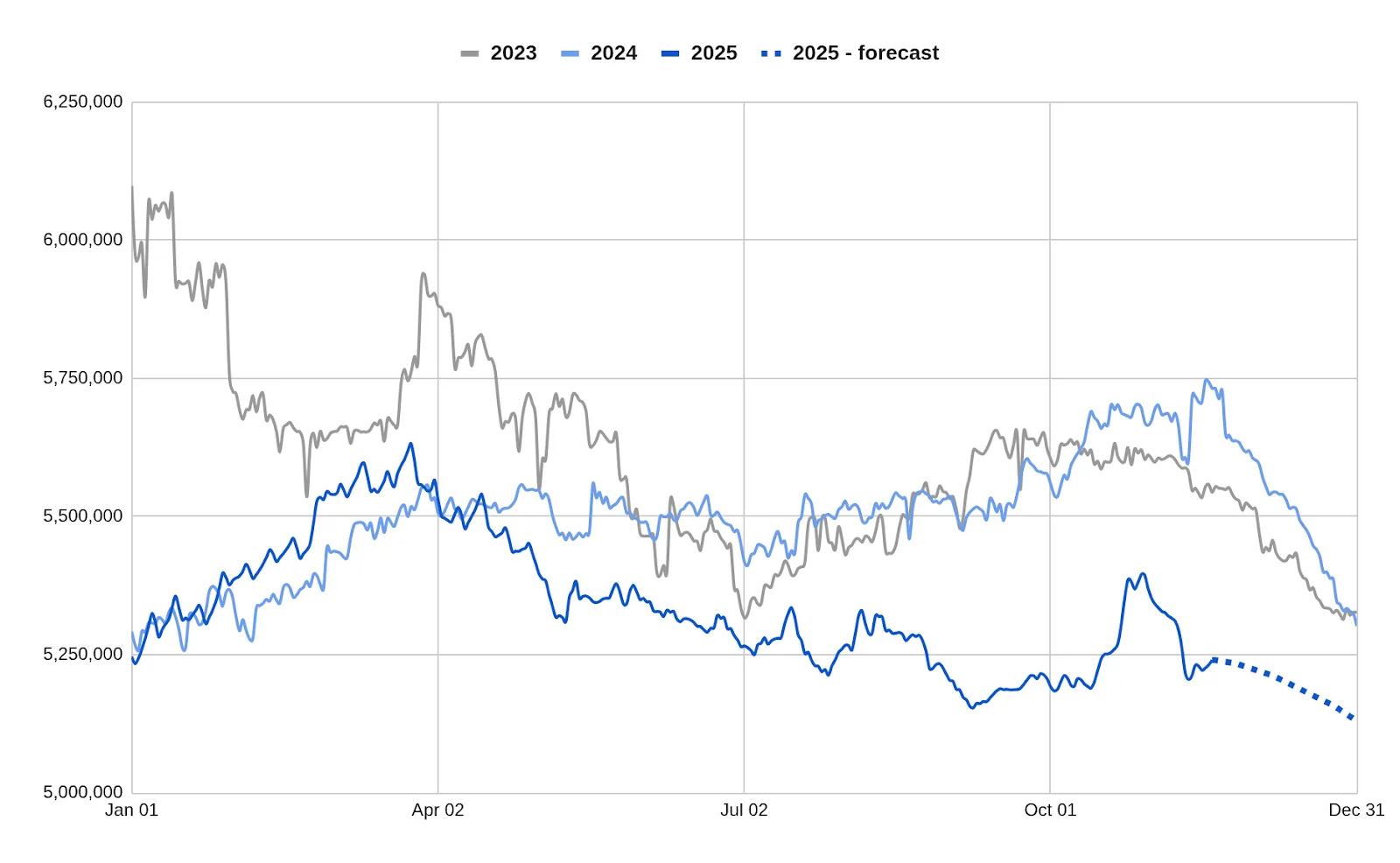
Figure 10: Vacancy Trends Through Year-End, 2023–2025
The pattern aligns with a trend Aspen Tech Labs has observed for three consecutive years: postings fall sharply in November and December as employers let roles expire, finalize budgets, and pause nonessential hiring.
What This Means for Job Boards Heading Into 2026
December’s numbers paint a clear story:
- The market has cooled, but the slowdown is uneven.
- Company behavior matters more than aggregate trends, and boards should closely track employer-level volatility.
- Salary transparency and wages continue to rise, signaling sustained competition for high-skill roles.
- Remote work demand remains resilient, even as companies pull back.
- Regional markets are diverging, offering both risk and opportunity.
For job boards, this is an ideal time to tighten category strategies, improve visibility for mid-market employers, and invest in data-driven insights around hiring signals.
Data Methodology
The findings in this analysis are based on Aspen Tech Labs’ JobMarketPulse platform, which monitors hiring activity from more than 200,000 direct employer career sites worldwide. This dataset captures a substantial share of live postings and provides near-real-time insight into employer demand. All figures reflect information published directly by employers, including salary ranges where available. All data comes from posted job requirements; salary figures should be interpreted as indicators of market trends rather than confirmed offer amounts.
[Want to get Job Board Doctor posts via email? Subscribe here.]
[Got a tip, document or intel you want to share with the Doc? Tell me. Tip so hot you need it to be encrypted? Use Signal.]

[…] Q4 2025 told us: UK hiring demand collapsed to just +11%, the sharpest global drop year-on-year. Job postings fell 5% month-over-month in November, and permanent placements declined for the 27th consecutive month. Yet most recruitment […]