
Eightfold Lawsuit: Strengths and Weaknesses
Happy Friday Job Board Doctor friends!
Good news! Our beautiful mutts have made it safely to Portugal and are settling in nicely to their new much sunnier oceanside village.
Which means my brain can now fully return to the good work of the Job Board Doctor. In addition, you all are continuing to come with great intel and I have lots of potential stories brewing.

Talroo brings clarity to improve new-hire retention
You filled the seat, but not with someone who plans to stay. The candidate made it through your entire interview process while quietly interviewing with other companies that pay 25% more.
When expectations aren't clear up front, retention suffers.
Get clarity up front with Talroo's SmartQualify.
Of course, the hot gossip on the street is the Eightfold class action lawsuit filed last week and that is where we will spend our time today.
Let’s take a look at what I think are the potential weaknesses on both sides of the courtroom and what the implications are for the industry.
WEAKNESSES IN THE PLAINTIFFS’ CASE
Let’s start with the plaintiffs’ claims. They are asking A LOT of the court and bringing big unanswered questions for consideration. Does it have legs? That is for a judge and us to decide.
1. The Threshold CRA Question is Unsettled
The entire case depends on classifying Eightfold as a “consumer reporting agency” (CRA). The CRA designation traditionally applies to companies like Equifax, TransUnion, and background check firms.
Why this is a weakness: From my research, no court has definitively ruled that AI talent matching platforms are CRAs under the Fair Credit Reporting Act (FCRA).
The complaint cites the 2024 Consumer Financial Protection Bureau (CFPB) guidance.
Eightfold may argue they are different; a software platform that employers license, not a company that independently compiles dossiers and sells them.
2. First-Party vs. Third-Party Data Question
Much of what the complaint describes is data the applicant voluntarily submitted:
- Resume
- Application information
- Work history
- Education
Courts have generally held processing data an applicant provides directly doesn’t trigger FCRA protections.
The complaint emphasizes third-party sources (such as LinkedIn, GitHub) but doesn’t establish what specific third-party data was collected about these particular plaintiffs.
Why this is a weakness: The complaint repeatedly uses “upon information and belief” when describing what data Eightfold collected about the plaintiffs.
This suggests they don’t actually know what was collected; they are inferring (haha) based on Eightfold’s general capabilities.
3. The “Consumer Report” Definition May Not Fit
FCRA defines consumer reports as communications bearing on “character, general reputation, personal characteristics, or mode of living.”
Why this is a weakness: As described in Eightfold’s engineering blog (cited in the complaint), the Match Score evaluates:
- Skill overlap with job requirements
- Title progression and seniority fit
- Industry and company similarity
- Historical hiring outcomes
These are arguably objective job qualification metrics, not subjective assessments of “character” or “mode of living.”
Eightfold may argue it’s a skills-matching algorithm that predicts job fit, not a report on someone’s character or lifestyle.
But without transparency, how can plaintiff’s know?
4. Causation and Harm Problems
The complaint doesn’t establish:
- What the plaintiffs’ Match Scores actually were
- Whether those scores caused their rejections (vs. simply not being the best candidates)
- Whether any specific inaccuracy in Eightfold’s data affected their evaluation
- What concrete harm they suffered beyond statutory violation
Why this is a weakness: The plaintiffs need to show concrete harm, but “I didn’t get hired and an AI was involved somewhere in the process” may not be enough.
Both plaintiffs have impressive credentials; they may have simply been outcompeted for highly competitive roles at Microsoft and PayPal.
5. The Match Score Isn’t a “Standalone” Consumer Report
A 2023 Eightfold LinkedIn post states the Match Score “is not a stand-alone score for a candidate. Rather it is the match of the candidate to job requirements as specified by the calibration of the job position.”
Why this is a weakness: This is a potential distinction from traditional consumer reports.
The Match Score is allegedly job specific – a 4.5 score for one role may be a 2.0 for another. Eightfold will argue this contextual, job specific nature makes it fundamentally different from a “consumer report” that bears on an applicant’s general character.
WEAKNESSES IN EIGHTFOLD’S DEFENSE
Now let’s focus on the defendant’s case. Does Eightfold’s marketing pitch reflect what they actually do or have we been sold smoke and mirrors on their capabilities?
1. Their Own Marketing Materials Are Devastating
The complaint brilliantly weaponizes Eightfold’s own words against them:
- Their privacy policy admits collecting “inferences drawn…to create a profile about a consumer reflecting the consumer’s preferences, characteristics, predispositions, behavior, attitudes, intelligence, abilities, and aptitudes”
- Their patent application shows they generate “Personality Insights (e.g., team player, introvert, extrovert, chess or equivalent player, high endurance athlete)”
Why this is a weakness: The FCRA covers reports bearing on “character, general reputation, personal characteristics, or mode of living.”
2. The Third-Party Data Collection is Undeniable
Eightfold’s privacy policy and marketing explicitly state they:
- Pull data from LinkedIn, GitHub, Stack Overflow
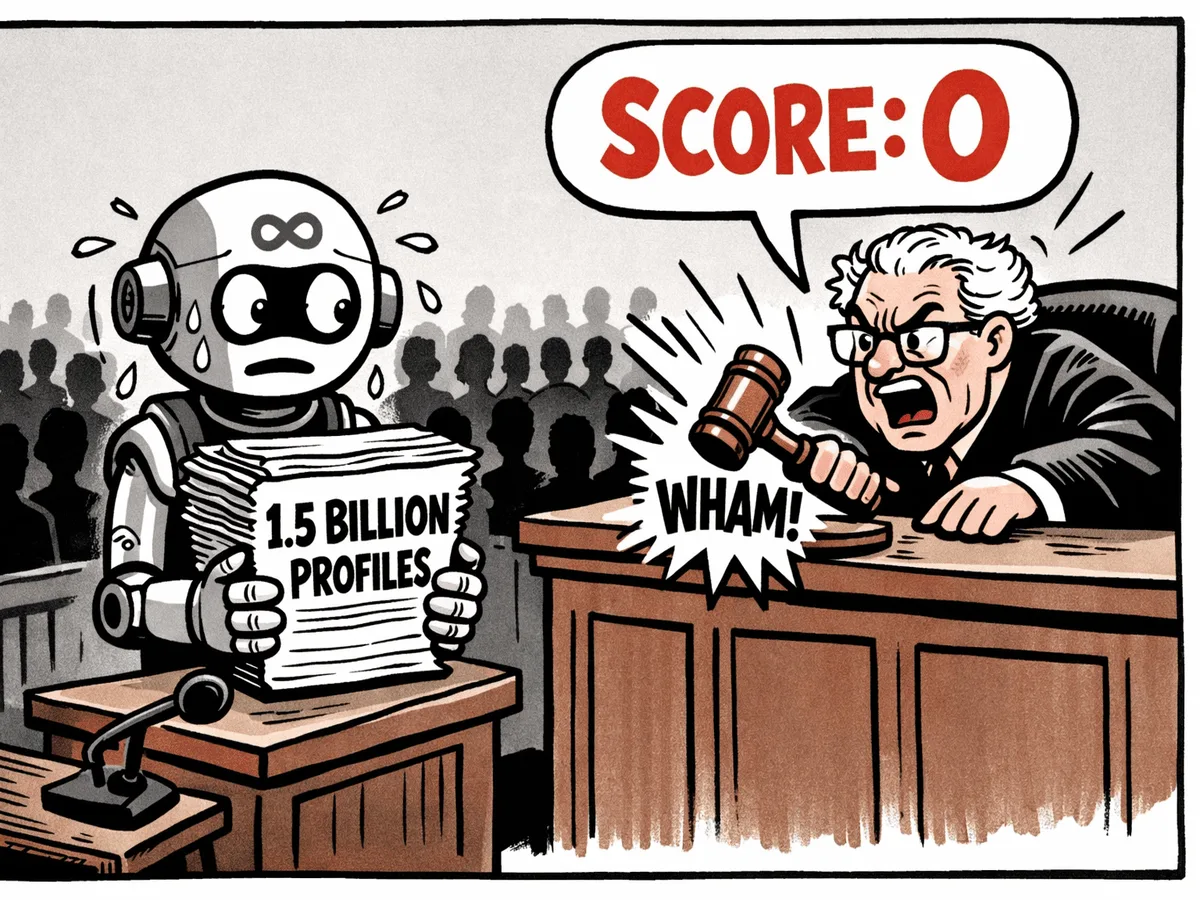
- Aggregate 1.5+ billion profiles into their training data
- “Enrich” candidate profiles with external information
- Retain applicant data for future use across multiple employers
Why this is a weakness: The key CRA trigger is collecting information from sources other than the employer or applicant. Eightfold unambiguously does this.
Their spokesperson’s claim that “we do not scrape social media” may be technically true, but they likely purchase data from vendors who do scrape social media. The distinction feels like hair-splitting.
3. The Training Data Problem
Even if Eightfold only uses applicant-submitted data for a specific match, their AI was trained on 1.5 billion profiles worth of third-party data collected without those individuals’ knowledge or consent. Every inference the model makes is shaped by that external data.
Why this is a weakness: The 2024 CFPB guidance specifically addresses this: “an entity could ‘assemble’ or ‘evaluate’ consumer information within the meaning of the term ‘consumer reporting agency’ if the entity collects consumer data in order to train an algorithm.”
Eightfold’s entire business model depends on patterns learned from massive third-party data collection.
4. No Dispute Mechanism Exists
There’s no evidence that job applicants can:
- See their Match Score
- Know what data informed it
- Dispute inaccuracies
- Correct errors before adverse action
This is a core FCRA protection and it appears entirely absent from Eightfold’s system.
Why this is a weakness: The complaint’s most compelling policy argument is that applicants are evaluated by an invisible system they can not access, review, or challenge. Even if Eightfold argues they are not technically a CRA, this lack of transparency is exactly the harm FCRA was designed to prevent.
5. The Legislative History is Remarkably On Point
The 1970 Congressional Record quote used in the complaint is almost eerie in its prescience:
“[T]he individual is in great danger of having his life and character reduced to impersonal ‘blips’ and keypunch holes in a stolid and unthinking machine which can literally ruin his reputation without cause, and make him unemployable…”
Why this is a weakness: Eightfold may struggle to argue Congress did not intend FCRA to cover computerized employment screening.
The legislative history explicitly contemplated this exact scenario. The seventies just couldn’t imagine how sophisticated the “stolid and unthinking machines” would become.
6. The “Service Provider” Defense is Difficult to Maintain
Eightfold might argue they are merely processing data on behalf of employers as a service provider.
But they:
- Maintain their own massive database (1.5B+ profiles)
- Add third-party data the employer never had
- Make independent inferences using proprietary AI
- Retain and reuse applicant data across multiple employers
- Market this independent capability as their core value proposition
Why this is a weakness: A true “service provider” would only process data the employer and applicant provide.
THe Doc’s BOTTOM LINE
Industry-wide implications may give the court pause.
If Eightfold wins, virtually any AI hiring tool would be exempt from FCRA. This would create a massive loophole: simply run your background check through an AI, call it “talent matching,” and avoid all disclosure, consent, and dispute requirements.
Courts may be reluctant to interpret FCRA in a way that renders its employment protections meaningless in the AI age. The statute was designed to evolve with technology just as the FTC and CFPB have consistently said.
The plaintiffs bring an important question before the court, but face legal uncertainty.
The core argument, that AI hiring tools should not get a free pass from laws designed to protect job applicants from secretive third-party evaluations, is compelling. But courts have never definitively extended CRA status to a platform like Eightfold.
Eightfold’s biggest problem are their own words.
Their materials, including their marketing, patent application and privacy policy, describe exactly the kind of third-party data collection, inferencing about personal characteristics, and opaque employment evaluations that FCRA was designed to regulate.
They’ve essentially written the plaintiffs’ complaint for them.
The potential impact is massive.
First from a dollars and cents perspective. If certified as a class, the exposure could be enormous (statutory damages of $100-$1,000 per violation, times potentially millions of applicants). This creates massive settlement pressure regardless of the legal merits.
Second for vendors instituting black box AI. There are too many vendors influencing decision-making in hiring without transparency, without the opportunity for correction, and with the expectation that they are beyond being held accountable.
Until Next Time,
Julie “The Doc” Sowash
[Want to get Job Board Doctor posts via email? Subscribe here.]
[Got a tip, document or intel you want to share with the Doc? Tell me. Tip so hot you need it to be encrypted? Use Signal.]

Comments (0)